
Malnourished Masculine Power
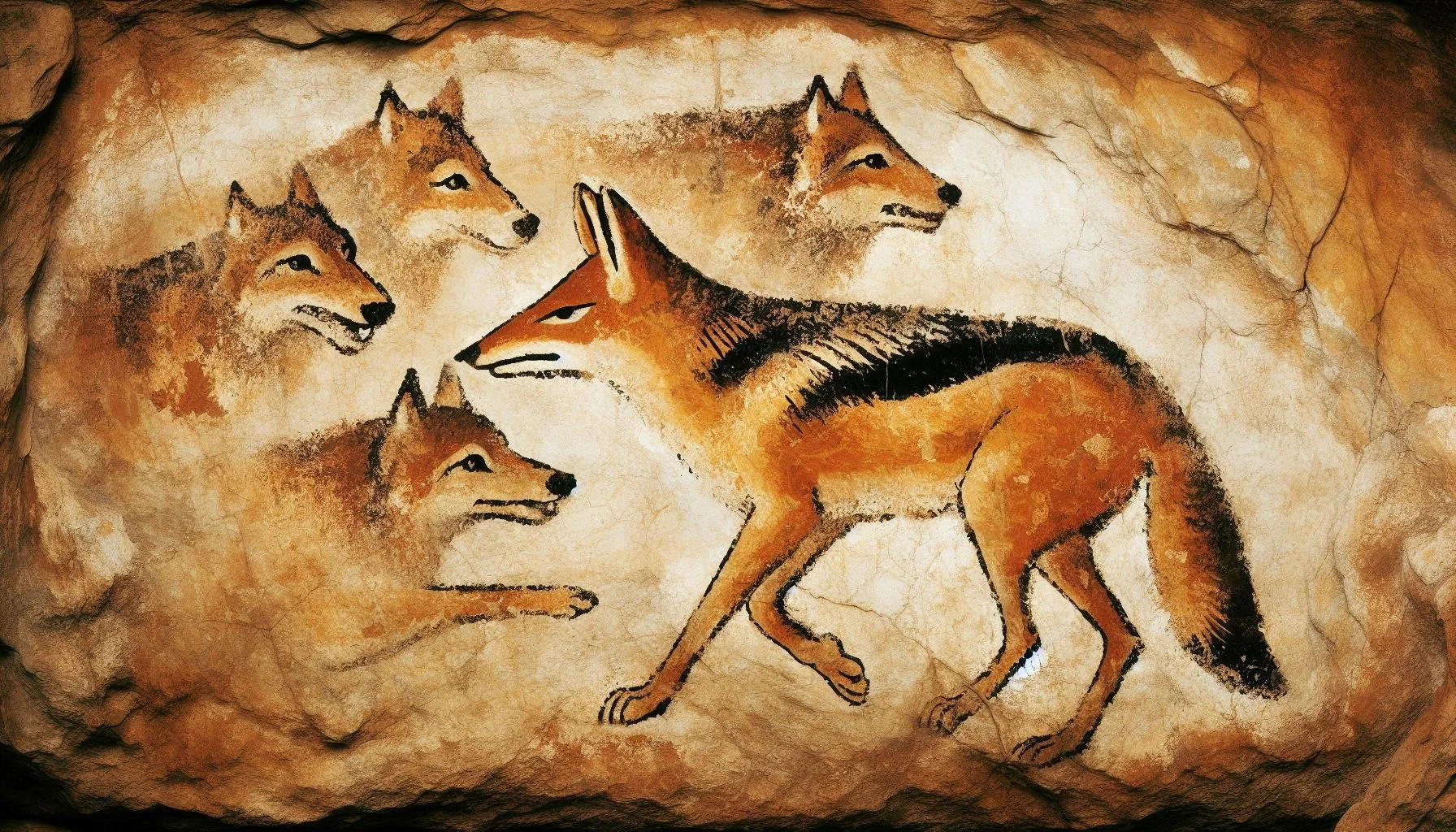
The King’s Beasts
There is a strange thing that happens in the wild when a true apex animal is underfed.
A wolf, deprived of proper nourishment and territory, does not simply become a weaker wolf. It begins to behave like something else entirely. It scavenges. It snaps. It circles instead of advancing. It survives in fragments, borrowing strategies that do not belong to its nature.
It begins to resemble a jackal.
Not because it is a jackal—but because hunger distorts its identity.
This is the heart of what the old stories tried to teach when they spoke of kings, beasts, and exile. When a sovereign creature is removed from right order—cut off from nourishment, structure, and authority—it does not become gentle. It becomes erratic.
This is not a moral failure.
It is a systems failure.
The Malnourished Wolf
A wolf is designed for cohesion, hierarchy, and purpose. It moves with the pack, protects territory, and plays a long game. But remove stability—remove rhythm, belonging, and meaningful authority—and the wolf does not rise to virtue.
It fragments.
A malnourished wolf behaves like a jackal: reactive, opportunistic, restless. Always alert. Never settled. Surviving, but never reigning.
Many high-performing men recognize this pattern instinctively. Outwardly, life looks successful. Career traction. Financial competence. Respect in professional arenas.
Yet inside the home, something feels misaligned.
Short patience.
Low presence.
A sense of always being “on,” but never fully there.
This isn’t because the man lacks discipline or intelligence. It’s because the part of him designed to govern has been underfed for too long.
The Lion Who Laughs Like a Hyena
The same distortion shows up in lions.
A lion is not meant to cackle. That sound belongs to hyenas—creatures built to harass, provoke, and outlast rather than command. Yet under starvation and social collapse, even a lion will begin to act beneath its station.
It will posture instead of lead.
React instead of decide.
Assert instead of embody authority.
This is what happens when power is stripped of stewardship.
And this is where many executive men find themselves without language for it.
They are decisive at work, yet oddly deferential or volatile at home. They lead teams but avoid emotional responsibility. They provide materially but feel distant relationally. The lion is present—but unfed.
Dispersal Is Not Failure
In the wild, there is a phase known as dispersal.
A young wolf leaves the pack—not because it is broken, but because it must discover its own territory. Dispersal is necessary. It is also disorienting. Dangerous. Lonely.
Many men never realize they are still living in this phase.
They have mastered the skills of survival: competence, performance, provision. But survival strategies, when carried too long, calcify into personality. What once kept you alive begins to limit you.
The tragedy is not that men disperse.
The tragedy is that no one teaches them how to return.
The Homecoming of the King
The king does not arrive as a tyrant.
He returns as a steward.
Reclaiming inner authority is not about becoming louder, harder, or more dominant. It is about alignment—bringing one’s inner life into order so leadership becomes inevitable rather than forced.
When this happens, something remarkable occurs.
The same man who commands respect in the boardroom begins to experience coherence at home. Decisions land cleanly. Boundaries feel calm instead of brittle. Presence replaces performance.
This is what many men glimpse—and quietly want—when they consider men’s coaching in Bend, Oregon: not motivation, but integration. Not more drive, but rightful direction.
The wolf feeds.
The lion rests.
The king remembers his kingdom.
And Yet… the Work Is Not Finished
Homecoming is not the end of the story.
A kingdom reclaimed still requires stewardship. Order must be maintained. The beasts must be tended—not slain. Authority must be exercised daily, not declared once.
That work is quieter.
More demanding.
And far more consequential.
For now, it is enough to recognize the hunger. To notice the jackal’s nervous energy where a wolf’s steady vigilance belongs. To sense the hyena’s laughter where a lion’s sparing roar should reign.
The invitation is not to change who you are—
but to feed what you already are.
The rest of the kingdom will reveal itself in time.
